OUR CAPABILITIES

You can count on our team of experienced foundry professionals.

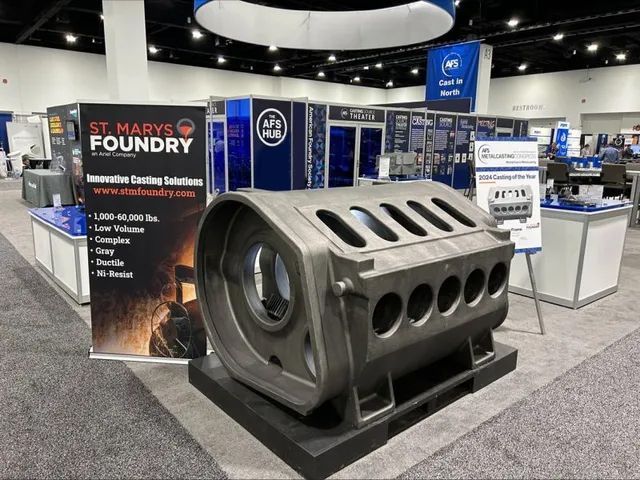
St. Marys Foundry booth with a large metal piece displayed at a trade show

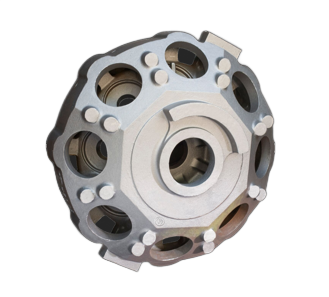
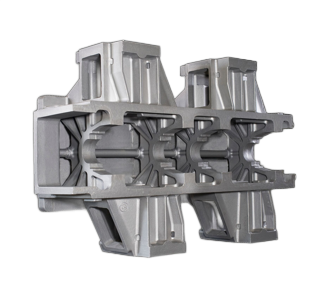
St. Marys Foundry won the prestigious 2024 AFS/Casting Source Casting of the Year award for our 6,600-pound ductile iron power frame used in the fracking industry.

Let us put our experience to work for you


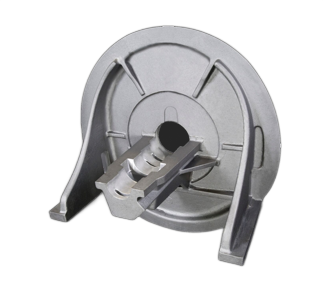
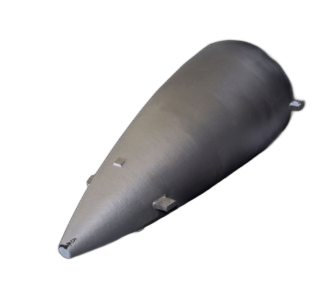
St. Marys Foundry features two, twenty-ton coreless induction furnaces. We utilize flask and pit molding with chemically-bonded sand to produce castings ranging from 1,000 lbs. to 60,000 lbs. We pour Gray Iron, Ductile Iron and Ni- Resist and customer-specific irons and provide all applicable heat treatments. You can count on our team of experienced foundry professionals to supply quality, on-time castings for a variety of applications.
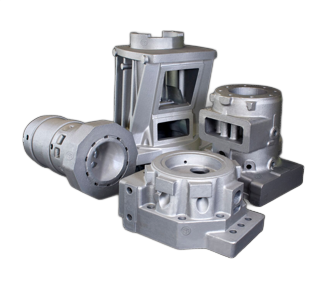
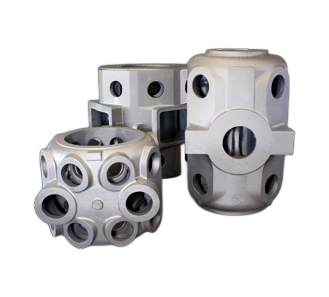
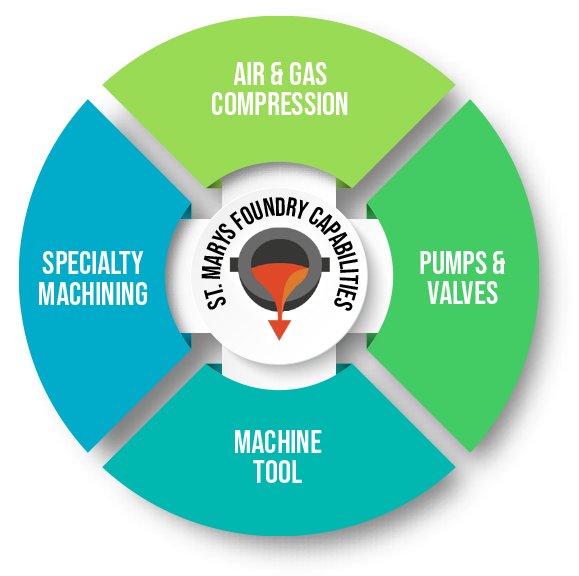
Circular diagram. St. Marys Foundry capabilities: air & gas compression, pumps and valves, machine tool, specialty machining.
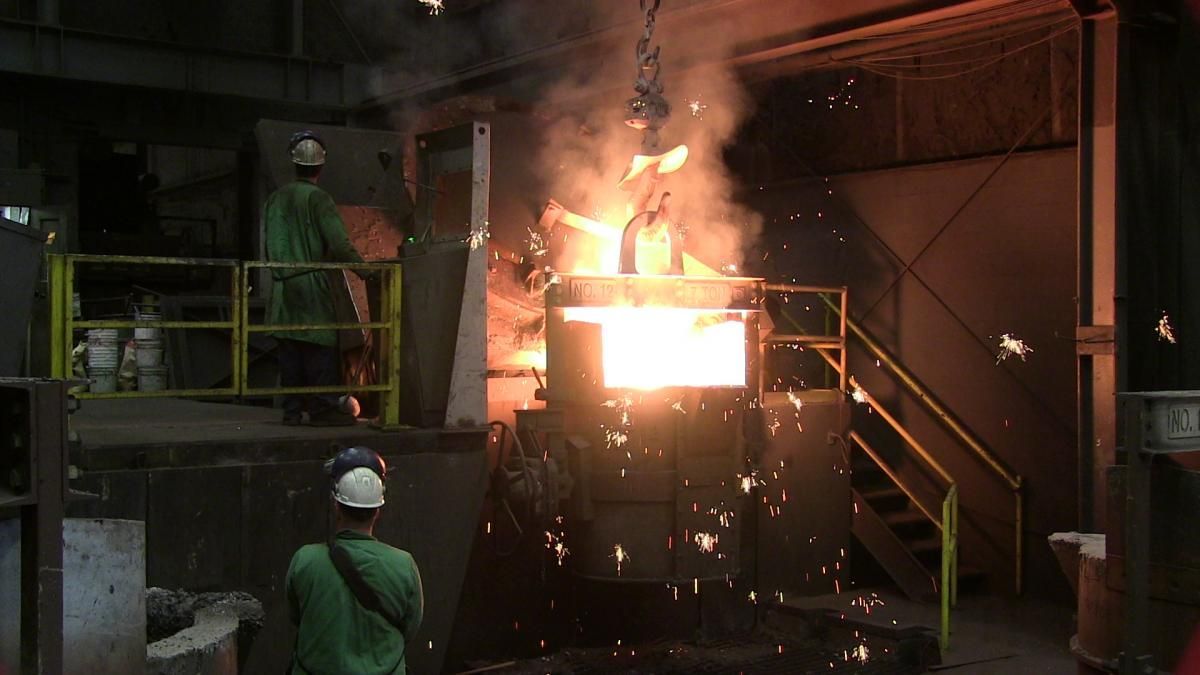
Industrial furnace with bright flames and sparks, workers nearby in a dim factory setting
Microscope close-up examining a lab slide in a bright scientific setting

Metallurgical & physical testing procedures


  • Tensile, Yield & Elongations Testing
  • Spectrochemical Analysis
  • Special Metallurgical & Physical Analysis
  • Brinell Hardness Testing
  • Impact Testing
  • Metallographic Image Analysis
  • Microanalysis
  • Combustion/Carbon/Sulfur Determination
  • NDT (Non-Destructive Testing) - DP/MP/UT/RT
  • SEM (Scanning Electron Microscope)

TYPES OF METAL

Gray

Ductile

Ni-Resist

Proprietary Customers Compositions

Tensile Strengths

60,000 - 120,000 psi Ductile Iron

20,000 - 60,000 psi Gray Iron

2 Melting Facilities

20-ton Electric Coreless

Induction Furnaces

Black line icon of a machine with a round sign above it.

No-Bake Sand Molding

In the no-bake process, sand is mixed with a chemical binder/catalyst system and then molded around the cope and drag halves of the pattern. After a specified period, the sand mixture hardens to form the mold halves and the pattern is drawn. Then, a refractory coating may be applied to both mold halves before they are brought together to form one complete mold for pouring.

Minimal black line icon of a massive bucket pouring molten metal.

Flask & Pit Molding

A flask is a metal frame used for making and holding a sand mold. For larger jobs, a pit instead of flasks is used. There are many sizes of flasks and pits. The size needed is determined by the pattern and amount of sand needed.